For shopsBecome a stockist (consignment or wholesale)

For shops looking to stock Showa retro goods

Series total200,000 copies

Showa no Kodomotachi
for your Showa retro shelf.

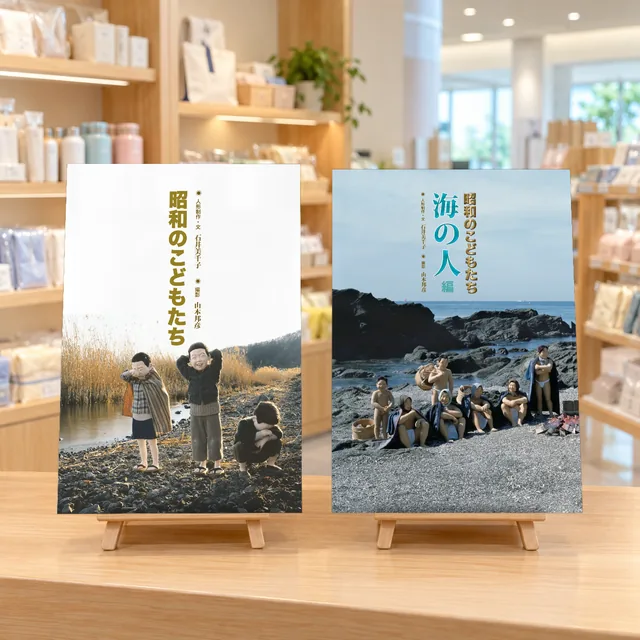
Two photo books by doll artist Ishii Michiko, “Photo Story: Showa no Kodomotachi.”
We are looking for shops to stock them on consignment (you pay 80% of the list price for what sells) or wholesale (you buy them at 70% of the list price).

Terms

Consignment

Pay only for what sells, at 80% of list price

Wholesale

Buy the items at 70% of list price

Individual customers can buy the photo books from the photo book page.

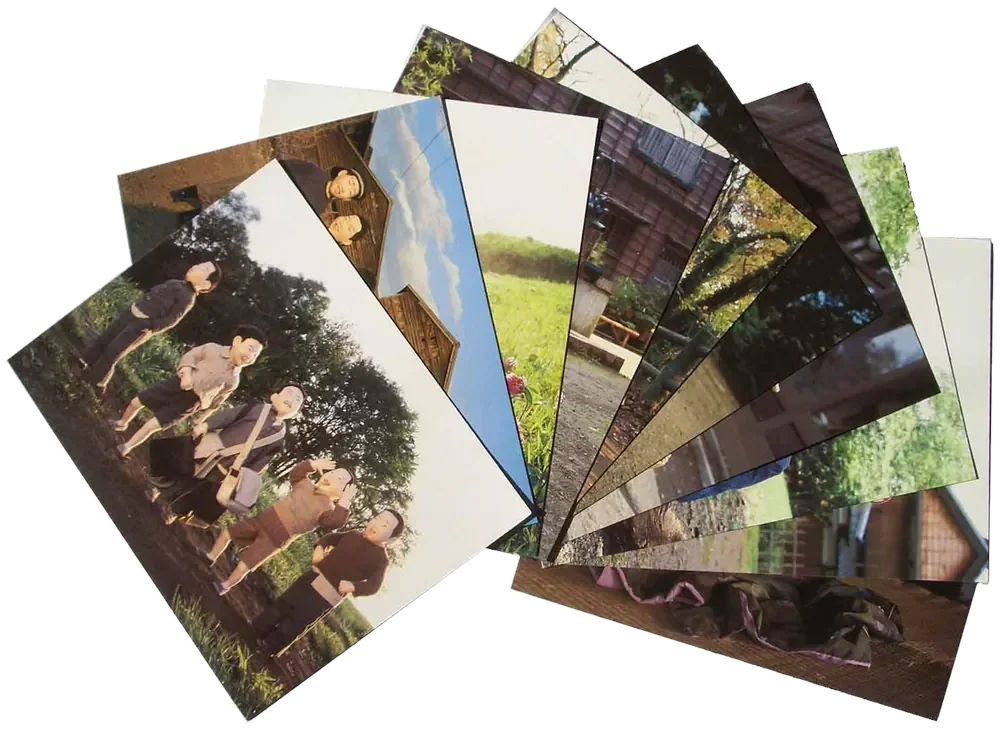
Showa no Kodomotachi postcards spread out like a fan
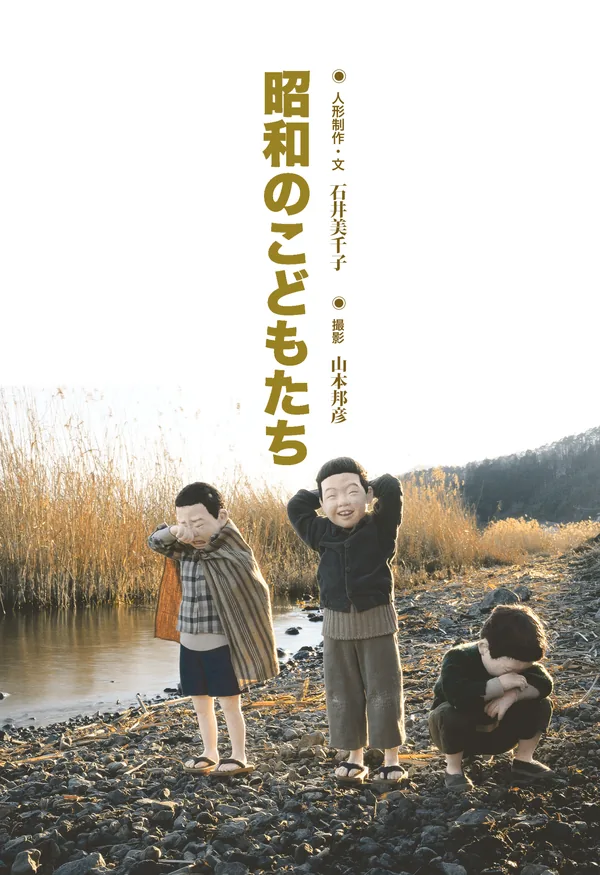
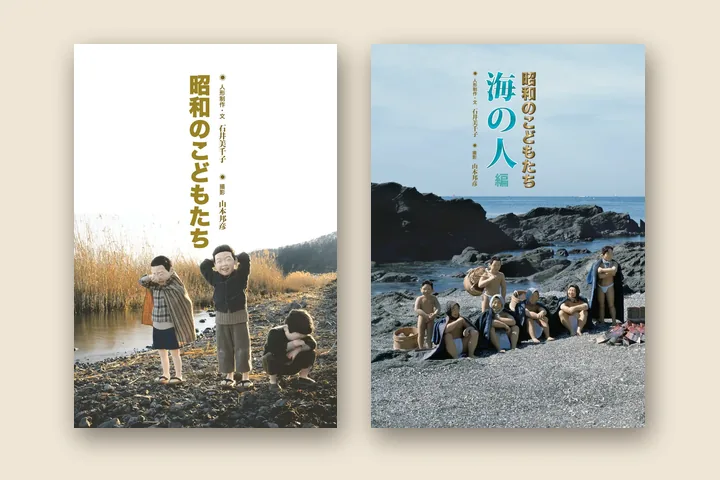
Cover of Photo Story: Showa no Kodomotachi — Hometown (Furusato)
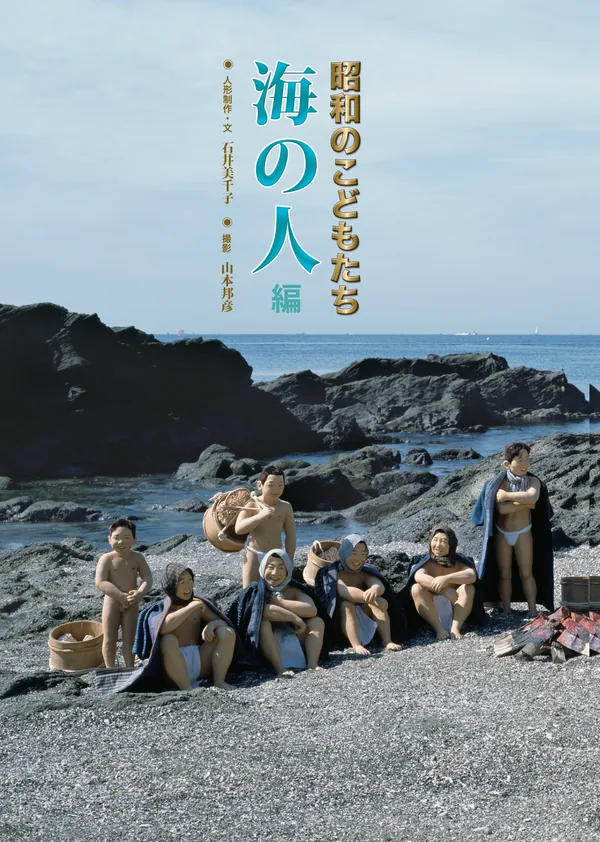
Cover of Photo Story: Showa no Kodomotachi — People of the Sea (Umi no Hito)

Photo bookseach¥2,200(tax incl.)

About Showa no Kodomotachi

Showa no Kodomotachi (Children of the Showa Era) is a body of work in which doll artist Ishii Michiko traced her memories of being a child in the Showa 30s (1955–1964) and recreated those scenes with dolls and dioramas.

The works are in two parts: Part 1, “Hometown (Furusato),” about people living in the countryside, and Part 2, “People of the Sea (Umi no Hito),” about people who live by the sea.

Every doll has its own face, full of life.
In every scene, a nameless someone lives one very real day.

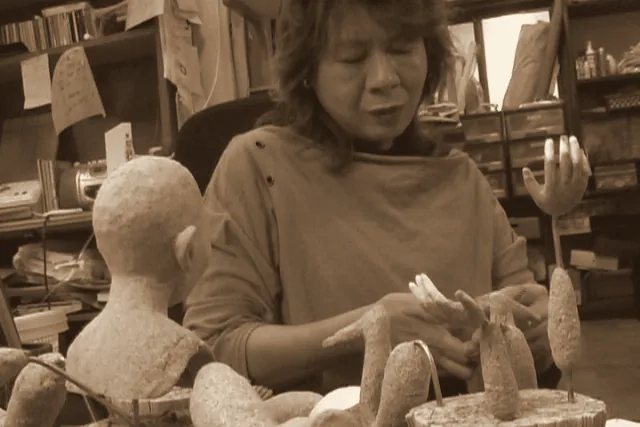
Doll artist Ishii Michiko working on the model of a doll
Ishii Michiko at work

Prefectures where exhibitions have been held

34/47prefectures

Map of Japan

Dolls that have been seen
by many people at exhibitions across Japan.

  • 64 titles / 332 figures

    All of Showa no Kodomotachi (Part 1 Hometown, Part 2 People of the Sea)

  • 100+ venues

    Places where exhibitions have been held (across Japan)

  • 1,500,000+

    Total visitors to the exhibitions

What makes Showa no Kodomotachi special

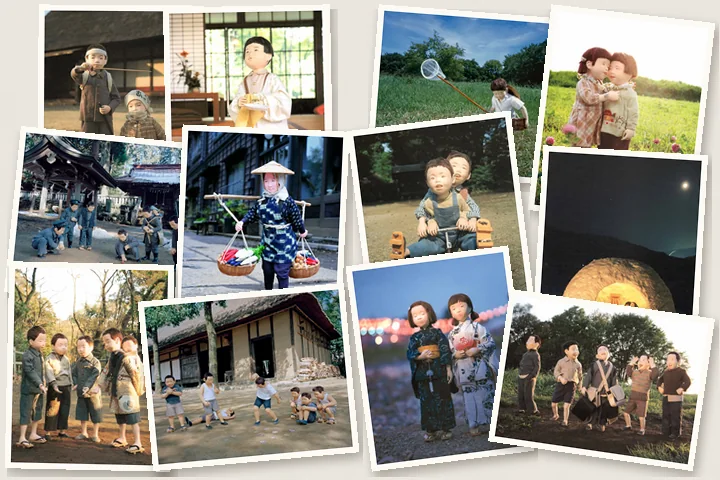
  • Prints of photos of doll works such as “The Temple Fair (Ennichi),” “The Snow Hut (Kamakura)” and “The Tricycle (Sanrinsha)”

    64 titles / 332 figures

    Every doll has a face of its own

    The doll works form Part 1, “Hometown (Furusato),” and Part 2, “People of the Sea (Umi no Hito),” with 64 titles and 332 figures in all. Every figure has a different expression, and every work is one of a kind. Each doll was handmade, one by one, by doll artist Ishii Michiko. Work on Part 2, “People of the Sea,” began in 2011 and was completed in 2016.

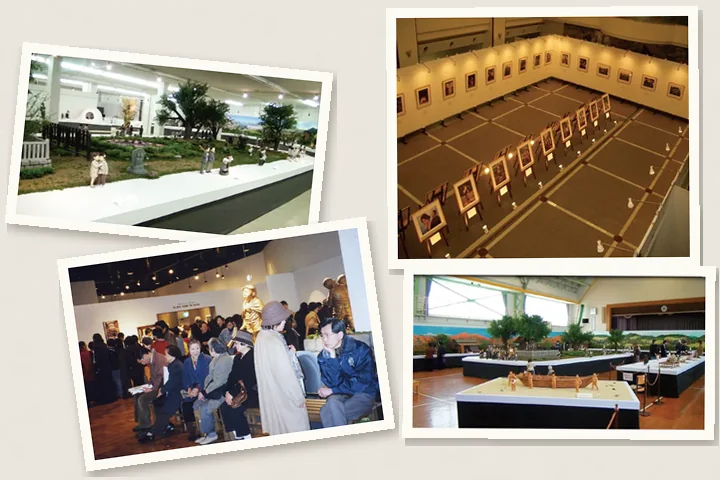
  • Photos of exhibitions held in museums, gymnasiums, empty shops and other venues

    Shown at more than 100 venues across Japan

    More than 1.5 million visitors

    Exhibitions of Showa no Kodomotachi, which depicts life in the Showa 30s with dolls and dioramas, have been held at more than 100 venues across Japan. Venues have included museums, art museums, department stores and local government events. The works have been shown at an event at Nagoya Dome and at the Hamada Children's Museum of Art. In total, more than 1.5 million people have visited, and we have received many moving comments.

  • A diorama of houses and cherry trees with dolls, spreading across a gallery of the Edo-Tokyo Museum

    2000 Edo-Tokyo Museum

    The museum's first exhibition of a living artist

    The Showa no Kodomotachi Doll Exhibition was held at the Edo-Tokyo Museum as a co-sponsored event of the “Tokyo 2000 Festival.” The 380-tsubo (about 1,250 m²) hall recreated the world of the Showa era, with full-scale sets of the Showa 30s and Showa no Kodomotachi bronzes.

  • A full-scale set recreating a sweet shop of the Showa 30s (exhibition at the Edo-Tokyo Museum)

    A pioneer of the Showa boom

    Long before today's Showa retro trend

    Ishii Michiko held her first solo exhibition in 1993, and from 1995 requests for exhibitions came from all over Japan. Her exhibitions across the country, starting with the 2000 exhibition at the Edo-Tokyo Museum, are said to be one of the sparks of the Showa 30s boom and the origin of the Showa boom.

  • Dioramas and dolls displayed in an elementary school gymnasium (Minamiuonuma, Niigata; marking the school's closure)

    Chosen for public commemorative projects

    For local celebrations and projects

    The works have been shown at events such as the 2007 project commemorating the establishment of Showa Day (organized by Hachioji City with the support of the Cabinet Office), the closing of an elementary school in Minamiuonuma, Niigata, and the “Rediscovering Richness of the Heart Project” in Ono, Fukui.

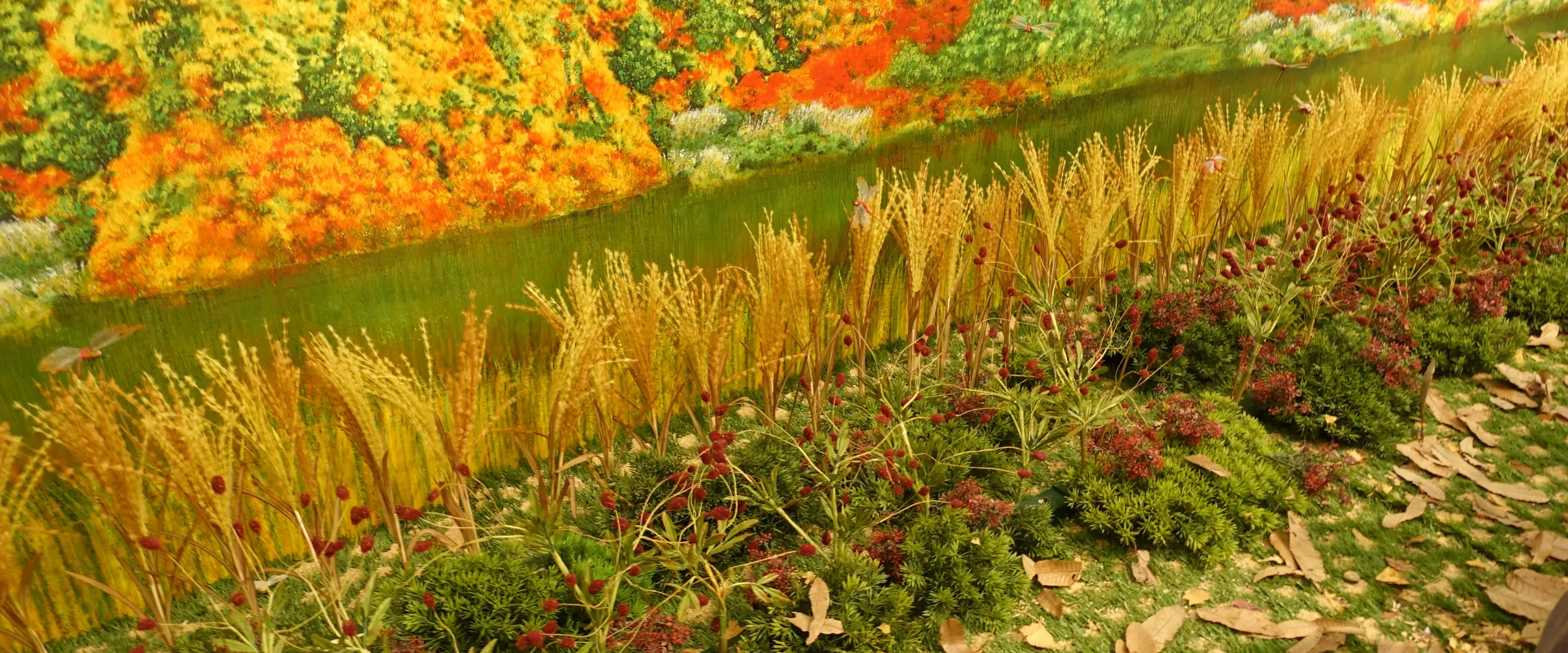
  • A diorama of trees and houses with dolls, spreading across a large gallery

    Dioramas

    Scenes of the Showa era in dolls and dioramas

    At exhibitions, the dolls are set among dioramas and backdrops of the four seasons made and supervised by the artist, Ishii Michiko. From the trees and houses, shrine and lotus pond of “Hometown,” about people living in the countryside, to the seaside life of “People of the Sea.” The dioramas are built at roughly one-quarter scale, so finely made to match the world of the works that they look real.

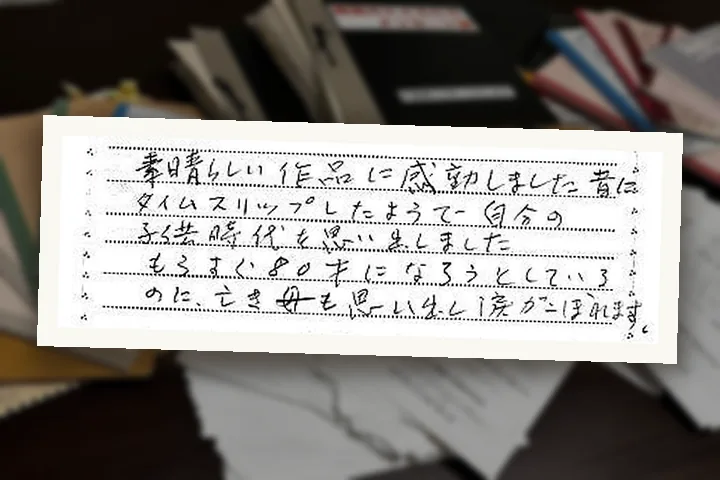
  • A handwritten comment sent in by a visitor

    Visitors' voices

    Dozens of boxes of comments and letters

    At the exhibitions, some visitors are moved to tears as they recall their own childhood or their mothers, while others chat with friends about the old days as they look at the dolls. Over the years, the letters of thanks and comments we have received would fill dozens of cardboard boxes. The images show some of the handwritten comments sent to us (in Japanese).

  • Covers of the photo books “Photo Story: Showa no Kodomotachi,” Part 1 Hometown and Part 2 People of the Sea

    Carefully made photo books

    200,000 copies sold in the series

    “Photo Story: Showa no Kodomotachi” is a series of photo books of scenes from the Showa 30s, shot with the dolls placed in real locations and finished with high-definition printing. There are two volumes: “Hometown,” about people living in the countryside (62 pages), and “People of the Sea,” about people who live by the sea (68 pages, including four works on gatefold pages). Photography by Yamamoto Kunihiko. Each work comes with a short story written by Ishii Michiko.

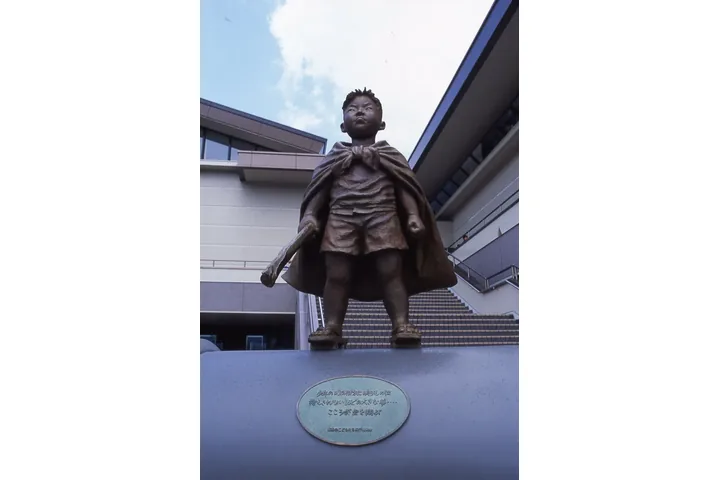
  • Bronze statue of a boy in a cape, standing on a pedestal in front of a building

    Bronze sculptures

    Showa children standing in town

    Bronze sculptures based on the dolls stand at public facilities and other places. The works made in bronze are “Crybaby (Nakimushi),” “The Quarrel (Kenka),” “Who Goes Farthest? (Tobashikko),” “Peeking Between the Legs (Matanozoki)” and “Little Rascal (Wanpaku).” In places where local people come and go, the bronze children quietly bring a sense of nostalgia to those who see them. They come in life size and one-quarter scale, and are made to order.

  • A newspaper article featuring Showa no Kodomotachi (blurred)Newspaper

    In the media

    Newspapers, magazines and TV

    Whenever exhibitions were held, the works were widely covered by newspapers across Japan and featured on TV news. They have appeared in magazines such as “Ginka,” “Seiryu” and “Serai,” including on a magazine cover. They have also been introduced on radio programs and in web articles, and featured in live TV broadcasts. They were used in a TV commercial for Iwatani Corporation, and once appeared in hanging advertisements inside Kintetsu trains.

Items

Products you can stock

Dolls and text: Ishii Michiko / Photography: Yamamoto Kunihiko. Besides selling them in shops, they can be used to spark conversation in facilities, or as commemorative items and gifts.

  • No.01

    Cover of Photo Story: Showa no Kodomotachi — Hometown (Furusato)

    Photo Story: Showa no Kodomotachi
    Hometown (Furusato)

    List price¥2,200(tax included)

    Part 1. A photo story of dolls depicting the lives of people in the countryside.

    Specifications
    62 pages; four-color printing
    Dolls and text
    Ishii Michiko
    Photography
    Yamamoto Kunihiko

    See details on the special page (opens in a new tab)

  • No.02

    Cover of Photo Story: Showa no Kodomotachi — People of the Sea (Umi no Hito)

    Photo Story: Showa no Kodomotachi
    People of the Sea (Umi no Hito)

    List price¥2,200(tax included)

    Part 2. A photo story depicting people who live by the sea, including panoramic double-page spreads.

    Specifications
    68 pages; four works on gatefold pages
    Dolls and text
    Ishii Michiko
    Photography
    Yamamoto Kunihiko

    See details on the special page (opens in a new tab)

  • No.03

    Showa no Kodomotachi postcards spread out like a fan

    Large Postcards (picture postcards)
    “The World of Showa no Kodomotachi”

    Made to orderList price One set (10 designs) ¥1,000 (tax included)

    Large postcards about the size of two palms (167 × 214 mm). The back of each card tells the story of the work. Five sets, A to E (10 cards plus one bonus card per set). Printed after we receive your order (please ask us about delivery times).

    Size
    167 × 214 mm (yatsugiri size)
    Designs
    50 designs in all (five sets, A to E)
    Terms
    Wholesale only (not available on consignment)
    Minimum order
    10 cards per design, with a minimum of 100 cards in total

Inside the photo story

Each work comes with its story, alongside the photographs (the text is in Japanese).

Bronze objects are not available on consignment.

How they might look on your shop shelves

The two photo books on a bookshelf
Postcards on a shelf

Sales record

Our sales record

Photo books “Photo Story: Showa no Kodomotachi” series total

200,000 copies

On event days and similar occasions

Hundreds of copies in a day

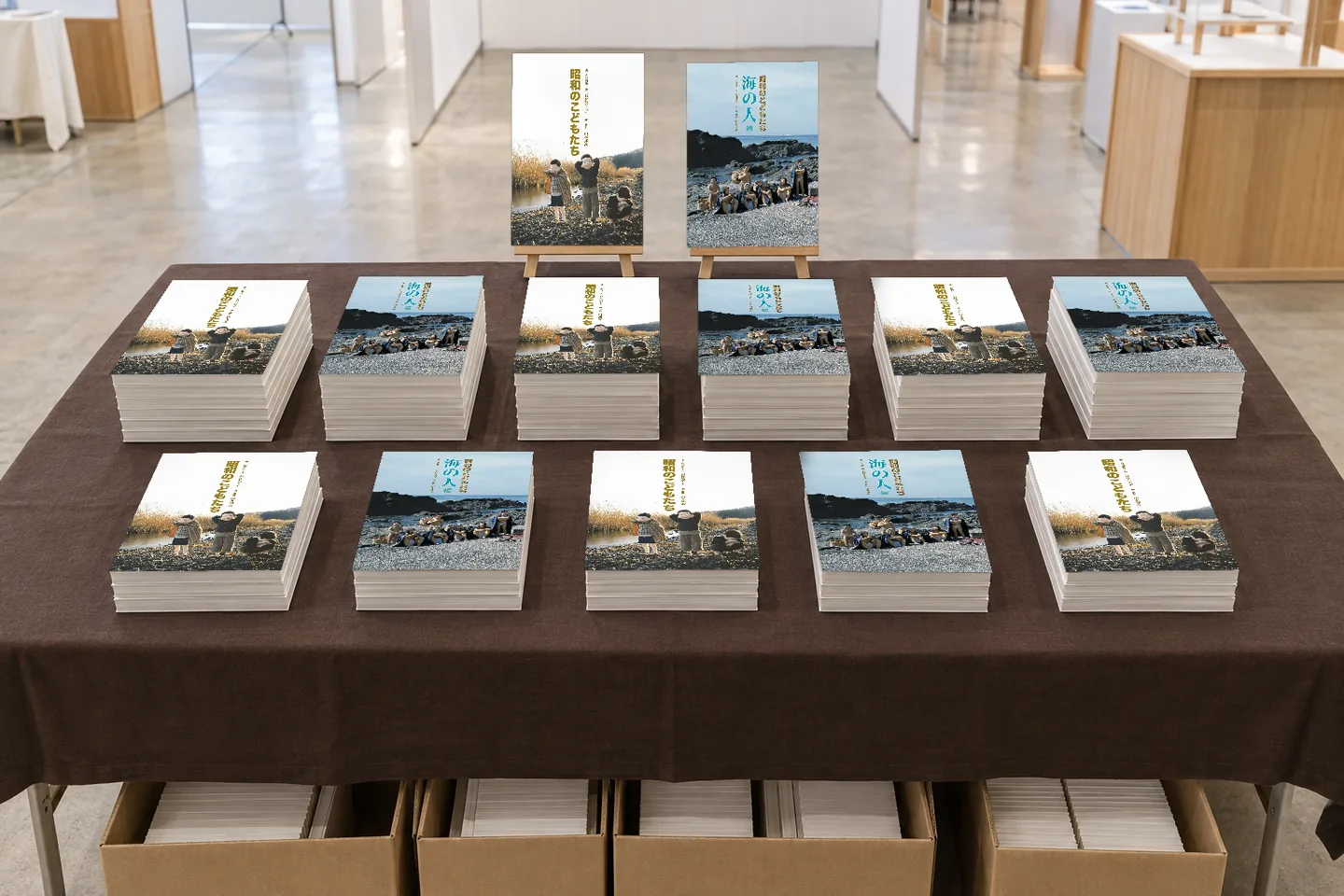
On event days and similar occasions, hundreds of copies have been sold in a single day.

Many copies of the photo books “Photo Story: Showa no Kodomotachi,” Hometown and People of the Sea, stacked on an event sales table, with boxes of stock under the table (image)

Shops

Shops like these

We hope people of every generation will pick up these scenes of children in the Showa 30s.
We look forward to hearing from shops like these.

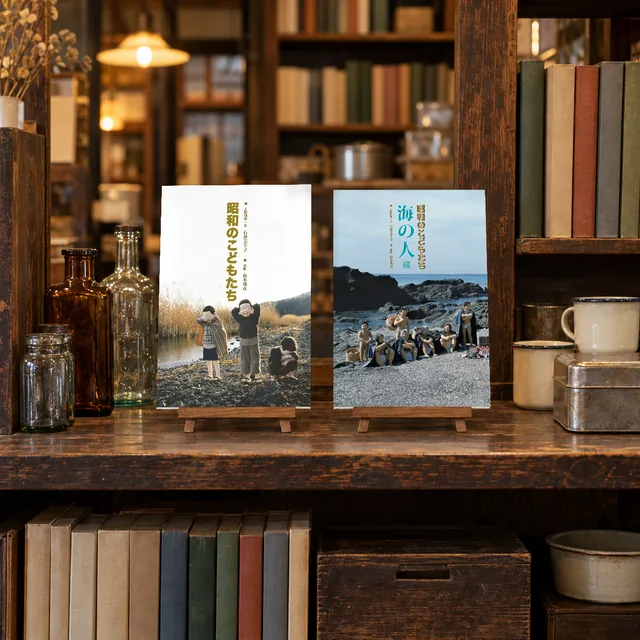
  • Two photo books standing in a book stand on an old wooden shelf, alongside old bottles and books (image)

    01

    Showa retrovariety and secondhand book shops

    Alongside nostalgic goods and old books, a scene from Showa-era life.

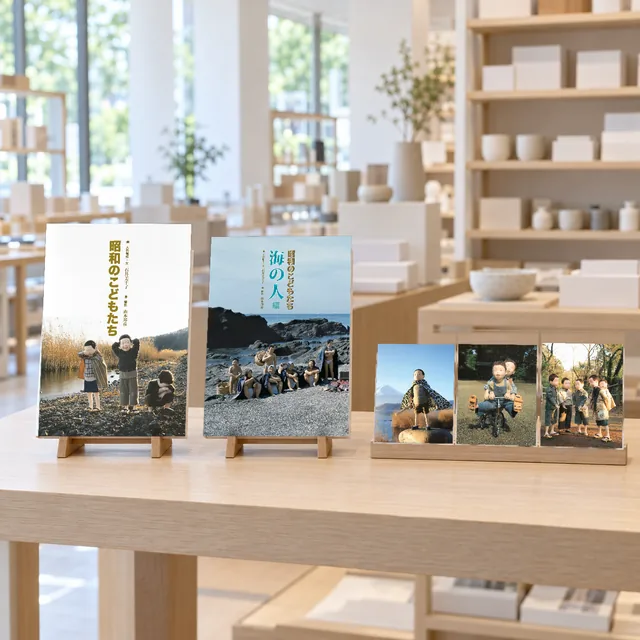
  • Two photo books in a book stand and three postcards on a table in a bright museum shop (image)

    02

    Museum shops

    A book visitors can pick up after seeing an exhibition.

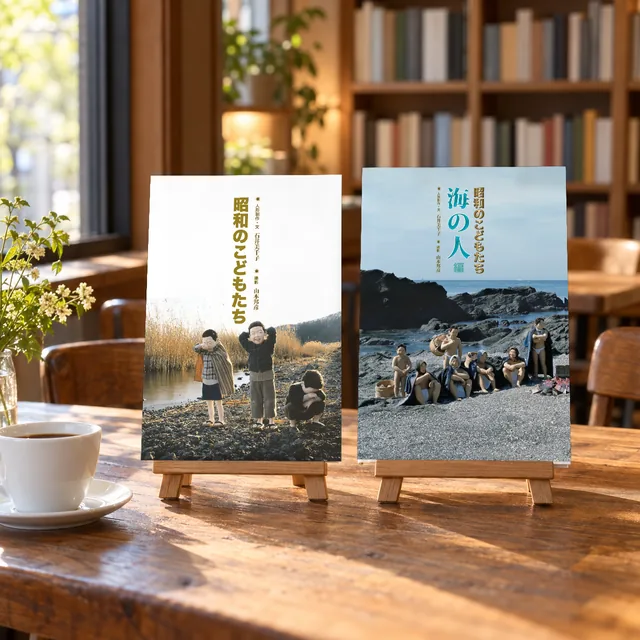
  • Two photo books in a book stand on a wooden table in a book café, next to a cup of coffee (image)

    03

    Bookstores and book cafés

    For the photo book shelf, or a corner of local or Showa-era books.

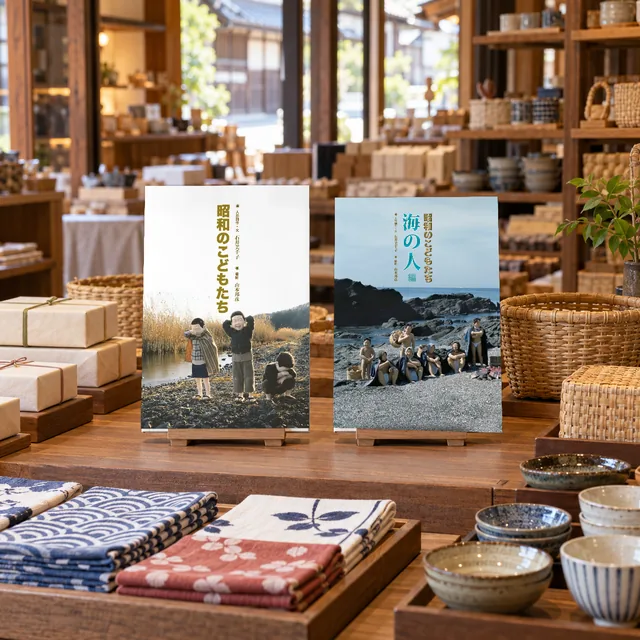
  • Two photo books in a book stand on a souvenir shop shelf, alongside tenugui cloths and dishes (image)

    04

    Tourist facilitysouvenir shops

    A book of hometown scenes for the travel souvenir shelf.

  • Two photo books in a book stand on a counter in a hospital shop (image)

    05

    Hospital and care facilityshops

    As a get-well gift, or a present for the family.

Other shops are also welcome to contact us.

Souvenir postcards

Why not offer our extra-large postcards in your souvenir shop?

Large yatsugiri-size postcards with photos of the Showa no Kodomotachi dolls.
Scenes of children in the Showa 30s, for a note to someone dear.

How they might look on a souvenir shop stand
Front and back, shown side by side(left: front, right: back; the work “Little Rascal (Wanpaku)”)
  1. 01

    Large postcards, the size of two palms

    With older eyes in mind, these picture postcards are made in yatsugiri size (167 × 214 mm).

    They are larger than standard postcards, so in Japan they go by non-standard mail (standard size, up to 50 g), with ¥140 postage (Japan Post rates as of October 2026).

  2. 02

    On the back, the story of each work

    On the back (the address side), each card tells the story of its work (in Japanese).

  3. 03

    50 designs, scenes of the Showa era

    Five sets, A to E, with 10 designs each. The list price is ¥1,000 (tax included) per set of 10 designs.

    Contact us and we will send you a brochure of all 50 designs.

Made to orderPrinted after we receive your order.

Postcards are available for wholesale only (shipping is paid by the shop).
Orders start at 10 cards per design, with a minimum of 100 cards in total.
Please ask us about delivery times.

Talk to us about stocking the postcards

Terms

Terms of business

You can stock our products on consignment or wholesale.

Consignment

80% of list price

Rather than paying for stock up front, you pay only for the items you sell, at 80% of the list price.

  1. 1We deliver the products
  2. 2You sell them in your shop
  3. 3You pay only for what sells
Minimum order
Photo books: 25 copies of each of the two titles

We take back unsold items if they are in good condition when we check them. Items that are dirty or damaged may not be accepted. Shipping costs for returns are paid by the shop.

Wholesale

70% of list price

You buy the products at the wholesale price (70% of the list price).

Minimum order
Photo books: 50 copies per title
Postcards: 10 cards per design, 100 cards in total
Ways to do business
Consignment (you pay 80% of the list price only for what sells), wholesale (you buy at 70% of the list price)
Products
The photo books “Photo Story: Showa no Kodomotachi,” Hometown and People of the Sea (list price ¥2,200 each, tax included), large yatsugiri postcards (made to order, wholesale only)
Minimum order
Wholesale photo books: 50 copies per title. Consignment photo books: 25 copies of each of the two titles.
Postcards (wholesale only): 10 cards per design, with a minimum of 100 cards in total
Consignment: payment and returns
We agree on the timing of payment individually with each shop. We take back unsold items if they are in good condition when we check them (items that are dirty or damaged may not be accepted; shipping costs for returns are paid by the shop)

Flow

Steps to start

  1. 01

    Inquiry

    Use the form below to tell us your type of shop and the products you are interested in.

  2. 02

    Terms

    We explain the terms, such as order quantities and payment.

  3. 03

    Start of business

    Once the terms are agreed, we deliver the products.

FAQ

What is the difference between consignment and wholesale?

With wholesale, you buy the products (wholesale price: 70% of the list price). Any unsold items remain your shop's stock.
With consignment, you pay only for the items you sell, at 80% of the list price. Unsold items can be returned (we take them back if they are in good condition when we check them; shipping costs for returns are paid by the shop).

Can we buy the products outright (wholesale)?

Yes. You can buy them wholesale at the wholesale price (70% of the list price), from 50 copies per photo book title (postcards: from 10 cards per design, with a minimum of 100 cards in total). Consignment (you pay 80% of the list price only for what sells) is also available.

What is the minimum order for wholesale?

For wholesale, the minimum is 50 copies per title.

What is the minimum for consignment?

For consignment, we send at least 25 copies of each of the two titles, Hometown and People of the Sea.

How does wholesale work?

Once you tell us how many copies you want, we send the products with an invoice enclosed.
We are sorry, but for your first order and for large orders, we ask for payment in advance.

How can we pay?

We accept bank transfer only.

What about shipping?

For consignment, we send the products free of charge (only for returns are shipping costs paid by the shop).
For wholesale, shipping is charged. We ship from Tokyo, and the cost depends on the quantity.
Postcards (wholesale only) are also shipped at the shop's expense.

How long does it take from order to delivery?

As a rule, we ship within three business days (postcards are made to order, so please ask us about delivery times).

What happens to unsold consignment items?

We take them back if they are in good condition when we check them. Items that are dirty or damaged may not be accepted. Shipping costs for returns are paid by the shop.

When do we pay for consignment sales?

We agree on this individually with each shop.

Can any shop stock the products?

We look forward to hearing from museum shops, bookstores, roadside stations (michi-no-eki) and tourist facilities, shops in senior and welfare facilities, shops in hospitals and medical facilities, and others. Other shops are also welcome to contact us.

Can we stock the postcards too?

Yes. The large yatsugiri postcards are available for wholesale only (not on consignment). They are printed after we receive your order (made to order). Please ask us about delivery times.

Do you have a brochure of all 50 postcard designs?

Yes. Contact us and we will send you a brochure of all 50 designs.

Can we buy single postcards?

Postcards are printed to order in set quantities, so orders start at 10 cards per design, with a minimum of 100 cards in total.

Can the postcards be mailed with standard postcard postage?

They are larger than standard postcards, so standard postcard postage does not cover them. In Japan they go by non-standard mail (standard size, up to 50 g), with ¥140 postage (Japan Post rates as of October 2026).

Can we stock the bronze objects?

Bronze objects are not available on consignment.
Contact

Talk to Us About Stocking Our Products

Please tell us your type of shop, the products you are interested in, and whether you prefer consignment or wholesale.
We will explain the terms, such as order quantities and payment.

Fill in only if different from the shop name.

Please enter it again to confirm.

Fill this in if you would like us to contact you by phone.

Products of interestOptional

If the quantity isn’t decided yet, please enter the number you expect to sell.

Please add details such as your sales floor and when you would like to start stocking.

  • It may take some time for us to reply. Inquiries made on Saturdays, Sundays, public holidays and during the New Year holidays will be handled on the next business day or later.
  • We use the personal information you provide to reply to your inquiry and to contact you about any resulting business (contracts, deliveries, settlements and similar matters). For details, please see our Privacy Policy (opens in a new tab).

This form is protected by reCAPTCHA (for details, see our Privacy Policy (opens in a new tab)).

You can also talk to us by phone:+81-428-26-2592

For shops Consignment and wholesale

Start with a brochure or a meeting.

For stocking the photo books and postcards, we can send you a brochure or talk it over in a meeting.

This takes you to the form at the bottom of the page.