- 1953
Born in Fukui, Fukui Prefecture. Lost her mother at the age of 13 months.
- 1959
Began eight years of growing up in a children's home in Fukui Prefecture.
- 1971
Joined Gakken, where she worked as an editor of women's magazines.
- 1973
Entered Tokyo Design College.
- 1975
After graduating, worked at a design firm.
- 1977
Married. With the birth of her first son, she also began caring around the clock for her husband's grandmother.
- 1983
Her husband's grandmother died just as her daughter was born.
Keenly feeling the link between life and death, she fell ill with tuberculosis around the same time and was forced to leave her newborn daughter behind while she underwent treatment. From her sickbed, she wrote 120 love letters to her four-year-old son.
- 1987
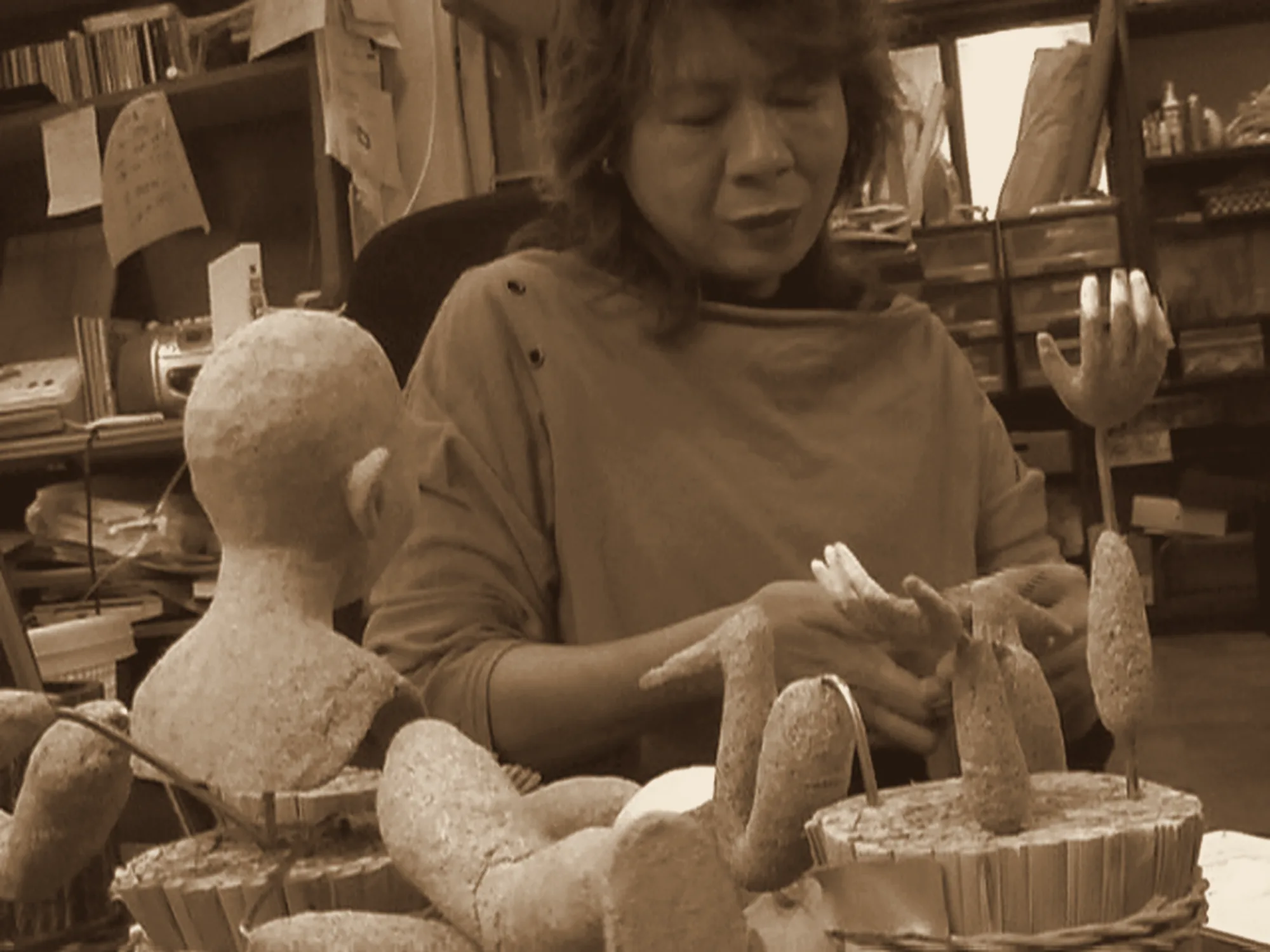
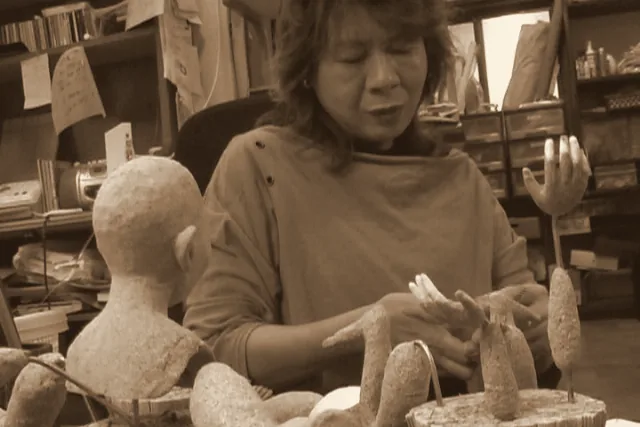
Around this time, began studying the fundamentals of toso doll-making.
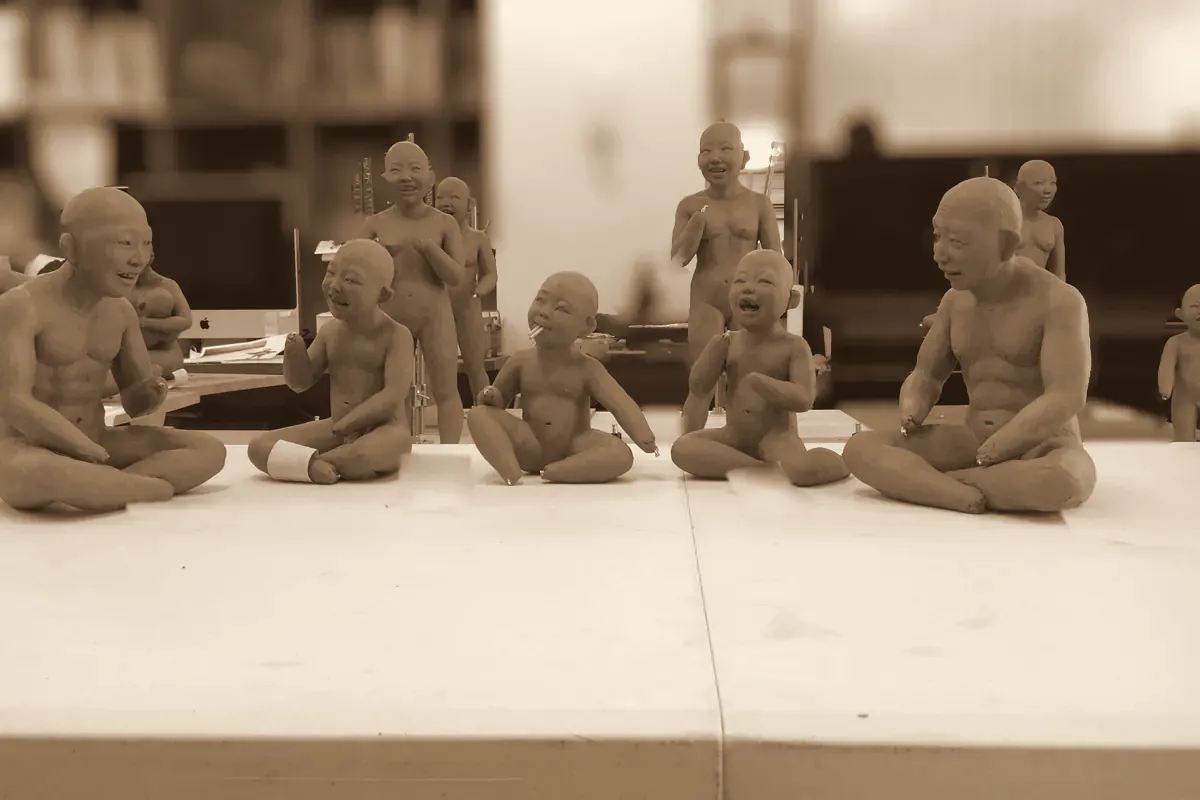
Choosing her own childhood as the theme of her work, she launched Showa no Kodomotachi as a message of encouragement to the baby-boom generation and to herself as she went on with her life.
- 1993
First solo exhibition, at the Yomena no Hana Museum of Art in Nakano, Tokyo, presenting 100 figures from Showa no Kodomotachi.
- 1995
The Showa no Kodomotachi Exhibition, organized by Hanshin Department Store, was held.
This exhibition led to invitations to exhibit from all over Japan.
- 2000
The Showa no Kodomotachi Exhibition was held at the Edo-Tokyo Museum as a co-sponsored event of the Tokyo 2000 Festival.
It was the museum's first exhibition devoted to a living artist.
Showa no Kodomotachi exhibitions featuring 48 titles and 214 figures went on to be held throughout Japan, helping to spark the boom in nostalgia for the Showa 30s that continues today.
- 2005
Commissioned by the Fukui City Policy Planning Office, created the “Dokurakugin Dolls (Dokurakugin Ningyo),” recreating the scenes of three tanka from the Dokurakugin of Tachibana Akemi, a poet of the late Edo period (Bakumatsu).
- 2007
The Showa no Kodomotachi Exhibition, commemorating the establishment of Showa Day, was organized by the City of Hachioji with the support of the Cabinet Office.
- 2007
Commissioned by the Iwatani Naoji Memorial Office of Iwatani Corporation, created “The World of Iwatani Naoji (Iwatani Naoji no Sekai)”, portraying the company's founder in two scenes, “In Pursuit of Energy (Enerugi o Oimotomete)” and “The Propane Pioneer (Puropan Gasu no Dendoshi).” Completed in April.
- 2007
Commissioned by the City of Ono, Fukui, produced a special original set of Showa no Kodomotachi photo panels. Fifty-two works were delivered for a touring display in Ono dedicated to community education and welfare.
- 2011
On March 11, the Great East Japan Earthquake struck, and the tsunami that followed devastated coastal cities across a wide area of the Tohoku region. Began work on “People of the Sea (Umi no Hito)” as a requiem.
- 2016
September: Completed Part 2, “People of the Sea (Umi no Hito),” the sequel to Part 1, “Hometown (Furusato),” of Showa no Kodomotachi.
- 2016
Parts 1 and 2, “Hometown” and “People of the Sea,” were shown together at Gotemba Kogen Tokinosumika in Gotemba, Shizuoka.
- 2022
Published “Photo Story: Showa no Kodomotachi — People of the Sea (Umi no Hito),” the photo book of Part 2.
- 2023
Passed away after an illness in October, at the age of 70.